
NOTE NO. 2 · TECHNOLOGY & LIFE
AI Ate
My Homework
Some thoughts on the headlines, the tools, and what I’m actually doing with all this stuff.

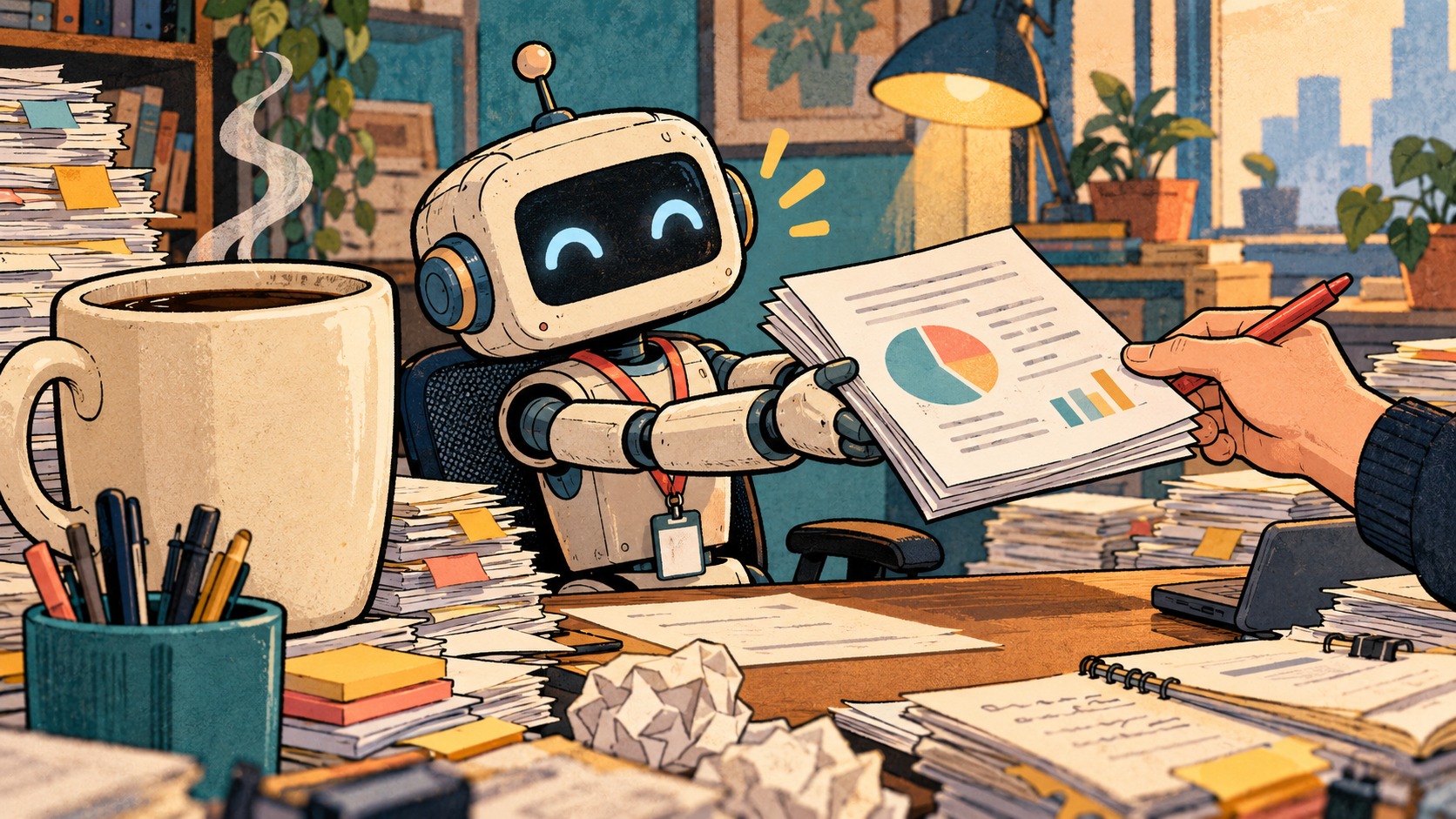
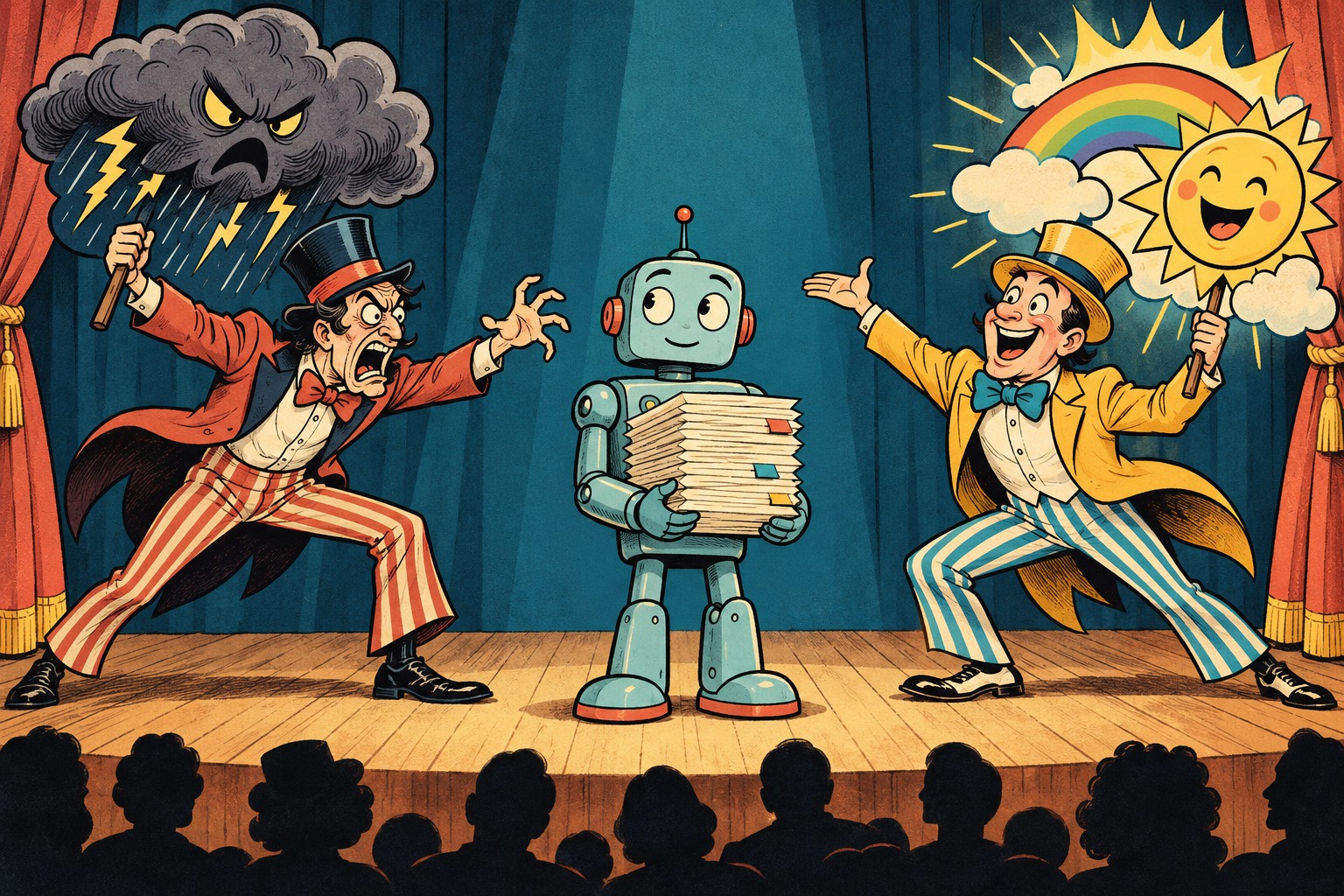
All right, for the second edition of Leftcoastlove Notes, the centerpiece of tonight’s discussion is going to be AI. Yes, it’s in all the headlines. It’s probably going to kill us all, if you believe some of what the media is feeding us. Or it’s going to cure cancer and take care of everything we don’t feel like doing anymore. Depends on which headline you opened.
I wanted to put together some thoughts around my own experience, both having to get some basic skills with the AI tools available for my job and, on the personal side, figuring out what I can actually use this stuff for. Because despite having a few things to say about the way it’s being presented, I’ve been having a pretty good time with it.
So let’s start with what I mean when I say AI. I’m talking about the commercially available tools I can use today, not whatever superintelligence somebody says is coming next. The language models behind these tools work from patterns learned from enormous amounts of information. My shorthand has been “a really smart database,” although that’s not technically what it is. It generates an answer rather than just finding one, and sometimes that answer is wrong. Really convincingly wrong. Something to keep in mind when it’s making you feel like you’ve just hired the smartest person in the room.
It can make connections, come up with suggestions, and put things together that I wouldn’t have thought to put together. What I’m not convinced of is that this is the same thing as having its own curiosity or a reason to care about the answer. That’s a much bigger conversation than whether it can make me a spreadsheet.
And let’s get this out there before we go too far. This is Sean’s opinion. I use the stuff. I’m learning the stuff. I am not sitting in a lab somewhere building the stuff.
My opinion is that a lot of what we’re seeing in the headlines is marketing for the companies building AI. There’s a ton of money involved, a ton of money still needed, and everybody wants to be the biggest, baddest company that wins the race. So what better way to get headlines than to tell us your product could change the course of humanity? Apparently “it helped Sean finish some documentation” isn’t going to get you quite the same attention.
On the other side of the coin, there are plenty of things AI could help us do. Research, repetitive office work, parts of manufacturing, all those mundane activities that take up time and don’t necessarily need a person doing every step by hand. We’ve gone through major changes with technology before. The internet, mobile phones, and other shifts have changed the work people do and created opportunities around that work that didn’t exist before.
That doesn’t mean it’s easy if yours is the job going away. But I don’t think the fact that work is changing automatically means the whole thing is bad. What bothers me is where the conversation seems to start, and where it seems to stop.
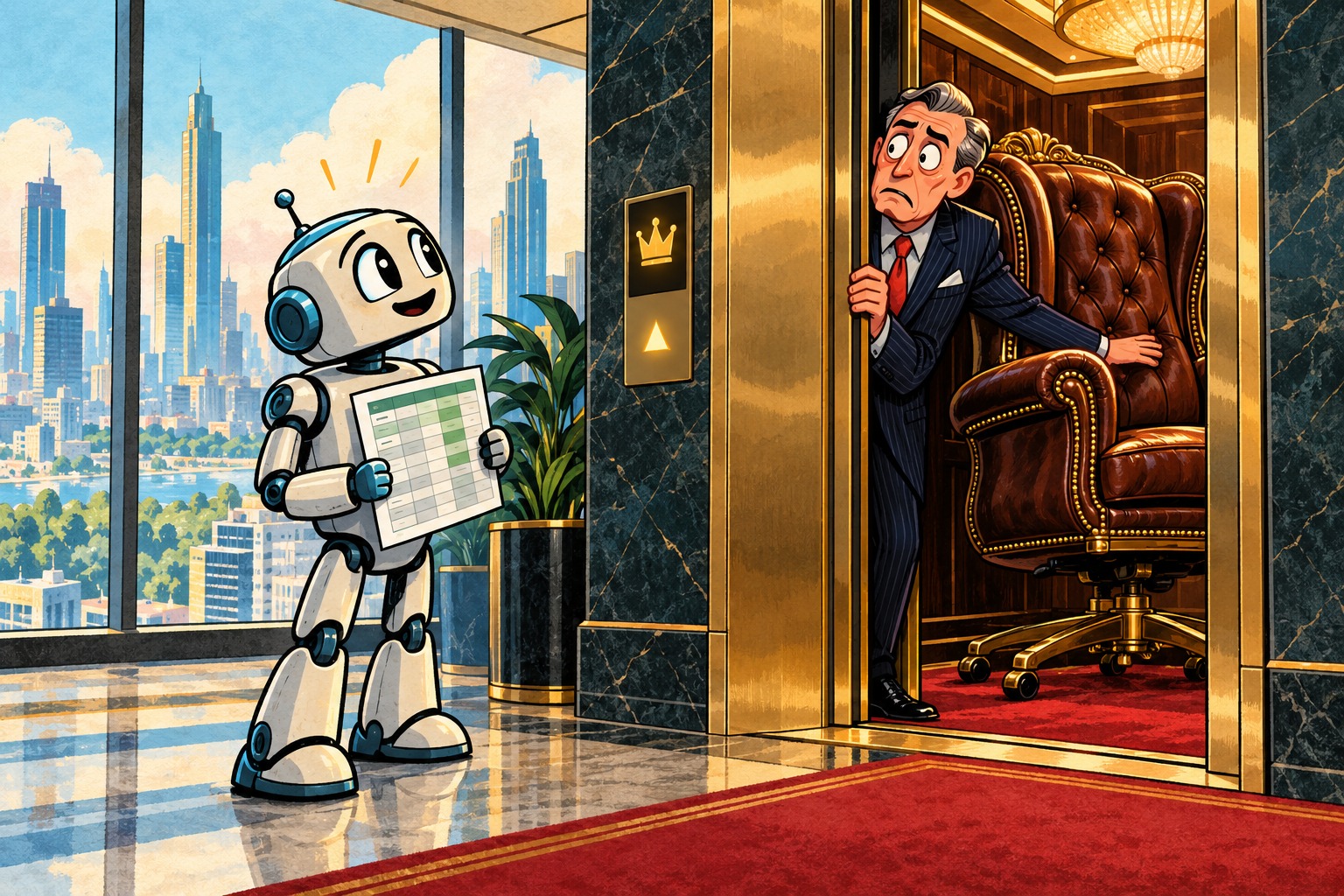
Why doesn’t the elevator go all the way up?
If AI can do all these great things, why aren’t we talking more about replacing some of the C-suite positions?
And again, I’m not saying companies and organizations don’t need leadership. They need people with vision, people who can put together the values and direction of a company and take responsibility for what happens. But some of these very, very highly paid positions also rely on processing data and making predictions. Those are exactly the activities we keep hearing AI is going to take over.
So why do we always hear about replacing accountants, legal assistants, and entry-level consultants? Where’s the discussion about what happens in the CFO’s office, or in some of those high-level planning roles?
If the goal is to save money, I’d think taking a serious look at a few very expensive positions might be worth doing before getting rid of large numbers of people further down in the organization. I’m not suggesting you put a robot in a nice chair and call it leadership. I’m asking why the same argument about efficiency doesn’t seem to travel all the way upstairs.
Maybe the people running these companies aren’t going to spend a lot of time touting AI’s ability to remove people in, say, their own positions. Funny how that works.
My other problem takes us back to the headlines. When the people building this stuff tell us it could cause extraordinary harm, I want to know how that fits with the part where we’re all supposed to hurry up and adopt it.
I’m not going to pretend every warning is a legal disclaimer, or that every company is making the same claims. But how do you tell the public your product could be dangerous on some enormous scale and then turn around and say we have to keep developing it as fast as possible because, if we don’t, somebody else will get there first?
Imagine a car company announcing its next line of cars could be very dangerous, but the product is so unique and so important to the American automotive industry that we have to keep going. Because if we don’t, the Chinese are going to develop it first, take the market, and get all the money.
Okay, but what about the people getting in the cars?
Or try that argument with an airline. How much risk would we be expected to take on just to protect somebody’s position in the market? In what world is that supposed to be a reassuring explanation?
Maybe that’s very cynical of me, but that’s kind of where I’m at with AI in the news. If you’re going to warn me about the danger, I want to hear what you’re doing about it, who’s responsible, and what happens if it goes wrong. Winning the race doesn’t answer any of that.
And we’ll save the whole data-center, data-center, blah blah blah discussion for another time.
Okay, now for the fun stuff
For both work and my personal life, AI has been amazing. And when I say AI here, I’m talking about the tools we can actually get our hands on. I personally use ChatGPT. The company I work for has a protected AI environment that uses ChatGPT models, with controls around our data and intellectual property. That’s where the work material goes.
A lot of the basic work I’m talking about involves reviewing documentation, doing some initial analysis, building Excel files, and filling out the kinds of template documents we use during a software implementation or upgrade. In the past, much of that would have been done by entry-level consultants. It’s also how they learned the business and became familiar with the deliverables and the different phases of a project.
Even with human hands doing the work, as a manager you still had to review all that output. You made comments, asked for edits, and went through a few review cycles before you had a draft ready to put in front of a client.
You still have to review it now. But the AI tools we use can get us to that useful first draft in a matter of days instead of weeks, depending on the assignment. That’s a pretty big deal.
At the beginning of a project, there can be a mountain of existing system documentation and business process material to work through. Process flows, spreadsheets, software specifications, all of it. You can bring that material into the approved tool, ask focused questions, and get help organizing it into something you can actually use.
These days, most companies doing implementations and upgrades are working with some version of a lean model. Everyone has fewer people and less time. For this kind of work, AI is a really good fit.
I do wonder about the learning part, though. If the tool is doing more of the work junior consultants used to learn from, we still need to figure out how those people get that experience. Somebody has to learn the business well enough to review the answer. That doesn’t just happen because the draft showed up faster.
On the personal side, I’ve been using AI to build websites and play around with things I can put into them, like simple games and graphics. Some of that is for my own amusement. Some supports my daughter and her friends’ activities. I’ve used it for reading guides and cheat sheets for our church’s summer sermon series, and for topics I’m interested in or hobbies I’m already spending too much time on.
If you’ve been around Leftcoastlove for a while, you know there’s never really been a shortage of topics going on between the ears. Getting them out of there and onto a website is another matter.
Now I can work through an idea and get HTML pages and folder structures that I can upload directly to my web host. Compared with the old days of using an HTML editor and preparing each page and each folder, that saves a huge amount of time. Add in the help with navigation and graphics, and the ability to refresh something without having to start all over, and I can’t say enough about how much easier it’s made the process.
Does everything work the first time? No. We’ve had a few rounds with a footer that apparently had other plans. But I can get an idea onto the page, look at it, and work through what needs fixing. That used to be a much bigger undertaking.
I’ve also been using it to support the podcast I do with my friend Myron. On that front, I can get help assembling the final MP3, cleaning things up, and leveling the voices before uploading it to the podcast host.
I used to use several different tools and an editor to assemble the files manually. The leveling was something I didn’t even really bother with. Now I can get help with the whole process, all the way down to putting together a description to share with the link when we put out a new episode.
Myron and I still have to have something to talk about. So far, that hasn’t been a problem.
The intern still needs a manager
For both work and my own projects, I’ve found these tools most effective when I treat them like a very, very smart intern. Someone who can do those manual and repetitive tasks much more quickly and produce something I can review and approve.
And that’s the most important part. Review and approve.
The current tools are really good, but they can’t replace the person responsible for the work. If you blindly take the direction, the content, or whatever comes back and present it as your own without checking it, that’s risky. It’s a predictive tool. It’s not you.
“AI ate my homework” might get a laugh, but it’s not much of an excuse when your name is on the finished product. You handed it in. You sent it to the client. You put it on the website. The very smart intern doesn’t get to take the blame for something you never bothered to read.
Ultimately, your work and your art are a representation of you. If AI is going to support that, you have to do your part and make sure you’re still in the output. You have to know what it says, whether it’s right, and whether it actually reflects what you were trying to do.
That goes for a client document, a website, and this post. I’m using the tool to help turn my rambling into something readable. I still want it to be my rambling.
So, is AI going to kill us? I don’t think so, at least not based on the tools I’m using today. I don’t think my experience answers every question about what comes next, either. But I’m not ready to jump from “this thing can generate a really impressive answer” to “this thing is alive.”
It has the benefit of an enormous amount of human learning. But human learning started somewhere. Somebody noticed something, got curious, and asked a question about our world that we didn’t understand. From there, we built science. We built art. We kept asking questions.
The tools can help us work with what people have learned and created. They can help us find connections and try things we couldn’t easily do before. That’s exciting. I’m just not convinced that having access to all that material is the same thing as having a life, or your own reason to wonder about it.
At the end of the day, the A stands for artificial. “Artificial life” still sounds like an oxymoron to me. Maybe that’s where I show my age. Maybe I’ll have to revisit that opinion someday.
For now, I’ve got websites to work on and a podcast to finish. The intern can help.
I’ll keep the red pen.
Stay Left. Love Loudly!

Same guy. New tools.
Still comics, still California, still too much going on between the ears.